The construction of the Penig subcamp
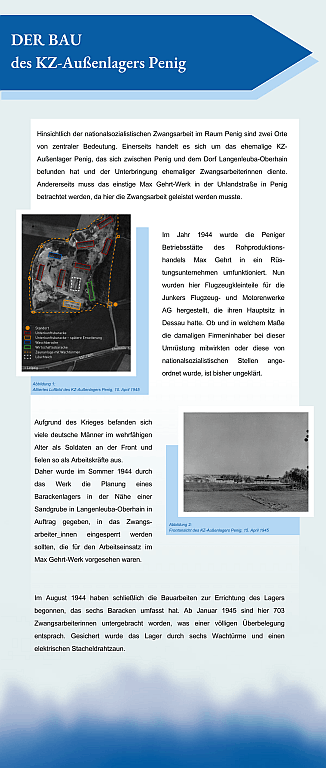
With regard to National Socialist forced labour in the Penig area, two sites are of central importance. On the one hand, there is the former Penig concentration camp subcamp, which was located between Penig and the village of Langenleuba-Oberhain and served to house former female forced labourers. On the other hand, the former Max Gehrt plant on Uhlandstraße in Penig must be considered, since forced labour had to be carried out there.
In 1944, the Penig facility of the raw products trading company Max Gehrt was converted into an armament’s enterprise. From then on, small aircraft components were produced there for Junkers Flugzeug- und Motorenwerke AG, whose headquarters were in Dessau. Whether, and to what extent, the company owners at the time were involved in this conversion, or whether it was ordered by National Socialist authorities, remains unclear to this day.
Because of the war, many German men of military age were serving as soldiers at the front and were therefore absent from the labour force. For this reason, in the summer of 1944 the plant commissioned plans for a barracks camp near a sand pit in Langenleuba-Oberhain, where forced labourers were to be imprisoned who had been assigned to work at the Max Gehrt plant.
Construction work to establish the camp finally began in August 1944; it comprised six barracks. From January 1945 onward, 703 female forced labourers were housed there, which amounted to severe overcrowding. The camp was secured by six guard towers and an electrified barbed-wire fence.
Figure 1: Allied aerial photograph of the Penig subcamp, 10 April 1945
Figure 2: Front view of the Penig subcamp, 15 April 1945
The women’s journey to the Penig concentration camp subcamp
From Budapest to Ravensbrück
The route taken by the women who later had to perform forced labour in Penig initially led from Budapest to the Ravensbrück women’s concentration camp. In October/November 1944, the girls and women were living in the Budapest ghetto in the Erzsébetváros district.
Some of them were called on 23 October 1944 to report to the KISOK sports ground, where they were assigned to forced labour. After about three weeks, these girls and women, along with others, were assembled at the brick factory in Óbuda. From there, they were driven on foot by the Arrow Cross – members of Hungary’s fascist party – to what was then Hungary’s border with the German Reich, to Hegyeshalom/Zurndorf.
After arriving there about three weeks later, they were taken over by the German SS and transported by rail to the Ravensbrück women’s concentration camp, where this first group probably arrived on 9 December 1944.
Between 25 November and 1 December 1944, the Arrow Cross rounded up additional women from their apartments and also brought them to the brick factory in Óbuda. Those gathered there were taken to Budapest’s Józsefváros railway station and, on 1/2 December 1944, were crammed into cattle cars. This transport also went to Hegyeshalom/Zurndorf, from where the women were taken on to Ravensbrück.
It is possible that the two groups mentioned above met in Hegyeshalom/Zurndorf and reached Ravensbrück at the same time, since all the women have 9 December 1944 recorded on their prisoner personnel cards as the date of admission to the Ravensbrück concentration camp.
Magda Szemere, who belonged to the first group, reported on 2 July 1945:
“We went to the Óbuda brick factory without any equipment. From there we walked all the way to Hegyeshalom, about 35 to 40 kilometers a day. Twice a day we received soup and some bread. We could no longer go on; we collapsed in the street, but the Arrow Cross beat us until we continued. Many of my fellow prisoners – among them many people I knew – died on the road. An epidemic of dysentery and typhus also broke out.”
The women’s journey to the Penig concentration camp subcamp
From Ravensbrück to Penig
In the extremely overcrowded Ravensbrück women’s concentration camp, the women encountered horrific living conditions. Immediately upon their arrival, all of their belongings, including their clothing, were taken away. They were showered, in some cases had their heads shaved, and were issued prisoner clothing.
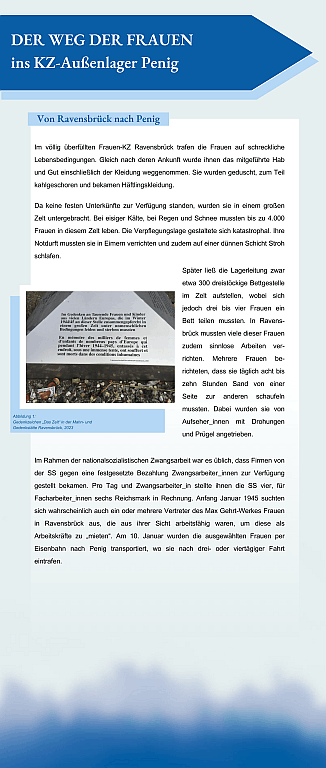
Because no permanent accommodation was available, they were housed in a large tent. In freezing cold, rain, and snow, up to 4,000 women had to live in this tent. The food situation was catastrophic. They had to relieve themselves in buckets and also sleep on a thin layer of straw.
Later, the camp administration did have around 300 triple-tier bunk beds set up in the tent, but three to four women still had to share one bed. In Ravensbrück, many of these women were also forced to perform pointless work. Several women reported that every day they had to shovel sand from one side to the other for eight to ten hours. They were driven on by female guards with threats and beatings.
Within the system of National Socialist forced labor, it was common for companies to be provided with forced laborers by the SS in return for a fixed payment. Per day and per forced laborer, the SS charged four Reichsmarks, and six Reichsmarks for skilled workers. In early January 1945, one or more representatives of the Max Gehrt plant probably selected women in Ravensbrück whom they considered fit for work in order to “rent” them as labor. On 10 January, the selected women were transported by rail to Penig, where they arrived after a journey of three or four days.
Figure 1: Memorial marker “The Tent” at the Ravensbrück Memorial Site, 2023
The women’s journey to the Penig concentration camp subcamp
The following quotations from survivors illustrate the inhuman conditions that prevailed in the Ravensbrück women’s concentration camp and during the transport to Penig.
Klára Rosenberg recounted on 12 July 1945:
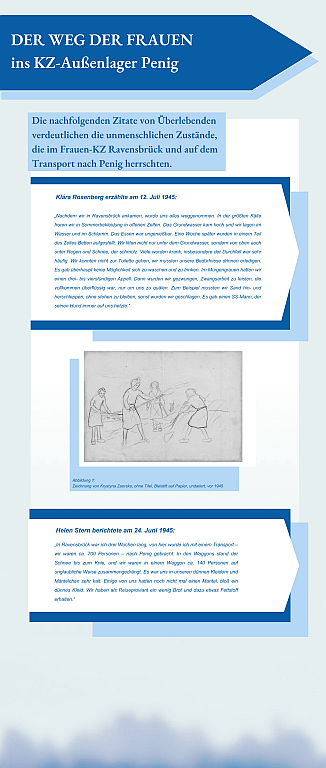
“After we arrived in Ravensbrück, everything was taken from us. In the bitterest cold we froze in summer clothes in open tents. The groundwater rose and we lay in water and mud. The food was inedible. A week later, beds were set up in one part of the tent. We suffered not only from the groundwater, but also from above – from rain and snow that melted. Many fell ill; diarrhea in particular was very common. We could not go to the toilet; we had to relieve ourselves inside. There was absolutely no possibility to wash or to get drinking water. At dawn we had roll call that lasted three to four hours. Then we were forced to do forced labor that was completely pointless, solely to torment us. For example, we had to carry sand back and forth without stopping; otherwise, we were beaten. There was an SS man who constantly set his dog on us.”
Helen Stern reported on 24 June 1945:
“I was in Ravensbrück for three weeks; from there I was taken to Penig on a transport – we were about 700 people. In the railcars the snow was knee-deep, and in one car about 140 people were crammed together in an unbelievable way. We were terribly cold in our thin dresses and little coats. Some of us did not even have a coat, only a thin dress. As travel provisions we were given a little bread and some fat.”
Figure 1: Drawing by Krystyna Zaorska, untitled, pencil on paper, undated, before 1945
Living and working conditions in the Penig concentration camp subcamp
The transport from the Ravensbrück women’s concentration camp arrived in Penig by train on 12 or 13 January 1945. In the Penig subcamp, as well as on the way to and from forced labor, the girls and women were guarded by up to 40 SS men and 18 female guards belonging to the SS entourage.
From the very beginning, living conditions in the barracks camp were precarious for the imprisoned women. For example, the camp was not connected to a water supply.
As a result, the forced laborers had no water to wash themselves, clean their clothing, or scrub the barracks. Catastrophic hygienic conditions and the spread of lice or outbreaks of disease followed, so that at times more than 100 women were unfit for work.
Using a stove that was intended to heat the barracks, the women melted snow during the winter months in order to wash with the water obtained. However, given the winter temperatures and the lack of fuel, it was impossible to warm the barracks with the stove. As a result, the forced laborers’ damp clothing – soaked by the weather – could hardly dry. Matters were made worse by the fact that there was no change of clothing.
Food provision was also completely inadequate. In the morning and evening, each woman received half a liter of coffee substitute. In addition, there were daily rations of 100 to 200 grams of bread, ten grams of margarine, and half a liter of soup or broth. Hunger was so extreme that, in desperation, they ate potato peels from the refuse or grass. Some of them weighed only 30 kilograms by April 1945.
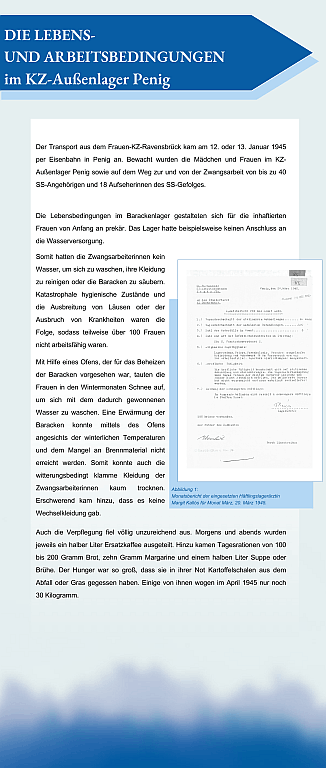
Figure 1: Monthly report by the assigned prisoner camp physician, Margit Kallós, for the month of March, 20 March 1945
Living and working conditions in the Penig concentration camp subcamp
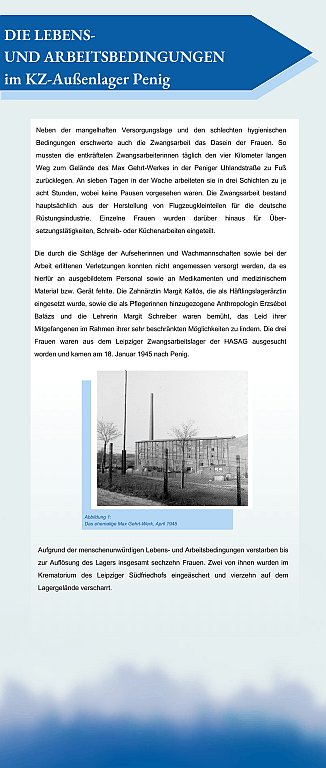
Alongside the inadequate supply situation and poor hygienic conditions, forced labor also made the women’s lives even harder. The exhausted forced laborers had to walk the four-kilometer route every day to the premises of the Max Gehrt plant on Uhlandstraße in Penig. They worked seven days a week in three shifts of eight hours each, with no breaks scheduled. The forced labor consisted mainly of producing small aircraft components for the German armaments industry. Some women were additionally assigned to translation work, clerical duties, or kitchen work.
The injuries the women suffered from beatings by the female guards and guard details, as well as injuries sustained during work, could not be properly treated, because there was a lack of trained personnel as well as medicines and medical supplies or equipment. The dentist Margit Kallós, who was deployed as the prisoners’ camp doctor, together with the anthropologist Erzsébet Balázs, brought in as a nurse, and the teacher Margit Schreiber, tried to alleviate the suffering of their fellow prisoners within the very limited means available to them. The three women had been selected from the HASAG forced-labor camp in Leipzig and arrived in Penig on 18 January 1945.
As a result of the inhumane living and working conditions, a total of sixteen women died before the camp was dissolved. Two of them were cremated at the crematorium of Leipzig’s Südfriedhof cemetery, and fourteen were buried on the camp grounds.
Figure 1: The former Max Gehrt plant, April 1945
Living and working conditions in the Penig concentration camp subcamp
The following quotes from two survivors testify to the inhumane conditions to which the women were exposed in the camp as well as in the context of forced labour:
Vera Hoffmann reported on 5 July 1945:
‘The factory was four kilometres from the camp. We had to walk this route twice a day. We worked eight hours a day standing at machines. The female guards beat us. As food we received once a day half a litre of turnip soup and twelve decagrams of bread. At that time, I was very weak and ill. When, despite the small number of prisoners still fit for work, I reported sick to the guard, she said I was not ill and beat me with her whip. She did this repeatedly to others as well. Because of the lack of vitamins, my wounds became infected and suppurated, and I had to lie down.’
Rózsa Herczog testified on 19 July 1945:
‘In Penig there was a small camp in which 700 people lived in wooden barracks, four kilometres from the town. I was already so weak that I did not want to work, but an SS man said: “Work or die!” We worked in an aircraft spare-parts factory, eight hours a day. All the time you had to stand at the machine, and after work another four-kilometre walk back – the same distance again in the morning. The treatment was brutal: SS women and men escorted us on the way and beat us on the road with thick whips. Countless people became emaciated. Then we were so weak that we would collapse when struck.’
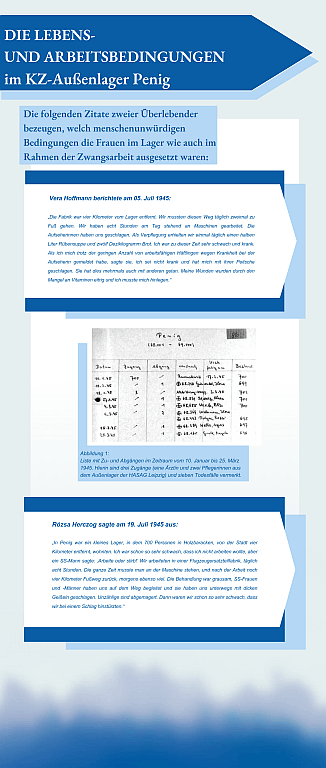
Figure 1: List of arrivals and departures in the period from 10 January to 25 March 1945. It records three arrivals (one doctor and two nurses from the HASAG Leipzig subcamp) and seven deaths
Death march from the Penig concentration camp subcamp
On 13 April 1945, the Penig concentration camp subcamp was dissolved as the front drew nearer. On 10 April 1945, another 125 women – predominantly Polish – had arrived from the Abteroda subcamp in western Thuringia, which had been dissolved on 4 April. When the SS evacuated the camp in Penig, they left more than 70 severely weakened women behind on the camp grounds without any provisions.
All the other roughly 740 women who were still deemed able to walk were driven by the SS on foot along what is now State Road 57 via Mühlau and Hartmannsdorf to Chemnitz. The destination of the transport is said to have been Karlovy Vary (Karlsbad). During this march, some of the guards and female overseers – some of whom were already partly dressed in civilian clothes – slipped away in order to evade prosecution by the Allies. This enabled individual women or groups to escape.
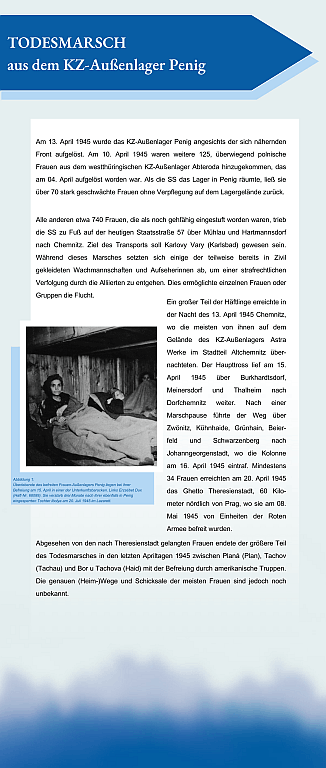
A large part of the prisoners reached Chemnitz on the night of 13 April 1945, where most of them spent the night on the grounds of the Astra Werke subcamp in the Altchemnitz district. The main column continued on 15 April 1945 via Burkhardtsdorf, Meinersdorf, and Thalheim to Dorfchemnitz. After a rest stop, the route led via Zwönitz, Kühnhaide, Grünhain, Beierfeld, and Schwarzenberg to Johanngeorgenstadt, where the column arrived on 16 April 1945. At least 34 women reached the Theresienstadt ghetto on 20 April 1945, 60 kilometres north of Prague, where they were liberated on 8 May 1945 by units of the Red Army.
Apart from the women who reached Theresienstadt, the larger part of the death march ended in the last days of April 1945 between Planá (Plan), Tachov (Tachau), and Bor u Tachova (Haid) with liberation by American troops. The exact routes (back) home and the fates of most of the women are, however, still unknown.
Figure 1: Survivors of the liberated women’s subcamp at Penig lie in one of the accommodation barracks at the time of their liberation on 15 April. On the left is Erzsébet Dux (prisoner no. 68089). She died in the infirmary on 20 July 1945, three months after her daughter Ibolya, who had also been imprisoned in Penig
Death march and liberation from the Penig concentration camp subcamp
The survivor Zsuzsanna Heumann described the conditions of the death march on 6 July 1945 as follows:
‘After about a week of marching, they put us into railway wagons. There were 90 people in one wagon. Next to me, one of my former schoolmates, Zsuzsa Fischer, died. A mother, Ilona Schenk, gave birth – or rather, she had a miscarriage. The child, of course, died. It lay with us in the blood for a day and a half until an SS woman came, took the little corpse and threw it out of the wagon. The other dead were thrown out the same way. There was also a calf in the wagon with us; it became wild along the way. The main reason for this was that it was a favourite pastime of the SS men to throw five or six potatoes into the wagon from time to time. Naturally, we all jumped up, and a great commotion broke out because we wanted to snatch at least one piece.’
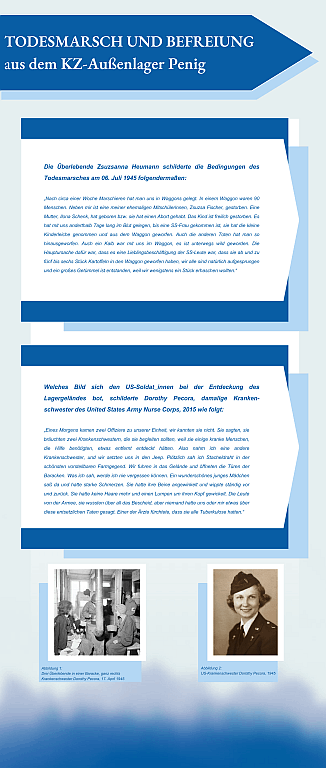
Dorothy Pecora, who at the time was a nurse in the United States Army Nurse Corps, described in 2015 what the U.S. soldiers saw when they discovered the camp grounds:
‘One morning two officers came to our unit; we didn’t know them. They said they needed two nurses to accompany them because they had discovered some sick people a short distance away who needed help. So, I took another nurse, and we got into the jeep. Suddenly I saw barbed wire in the most beautiful farmland imaginable. We drove onto the site and opened the doors of the barracks. What I saw I will never be able to forget. A beautiful young girl was sitting there and was in great pain. She had her legs drawn up and kept rocking back and forth. She had no hair anymore and had a rag wrapped around her head. The people in the Army knew all about it, but no one had told us – or me – anything about these horrific crimes. One of the doctors feared that they all had tuberculosis.’
Figure 1: Three survivors in a barrack; far right: nurse Dorothy Pecora, 17 April 1945
Figure 2: U.S. Army nurse Dorothy Pecora, 1945
Liberation from the Penig concentration camp subcamp
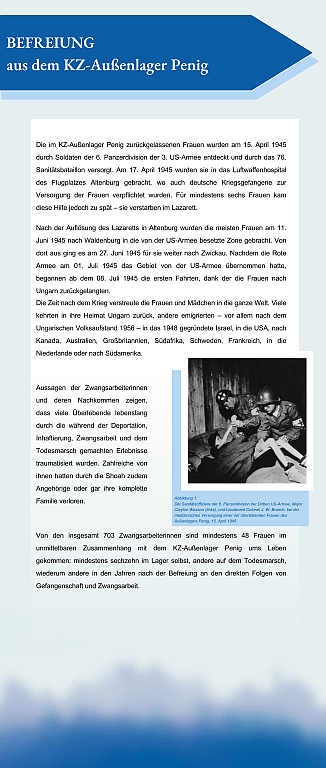
The women who had been left behind in the Penig concentration camp subcamp were discovered on 15 April 1945 by soldiers of the 6th Armoured Division of the U.S. Third Army and were cared for by the 76th Medical Battalion. On 17 April 1945 they were taken to the Luftwaffe hospital at Altenburg airfield, where German prisoners of war were also compelled to assist in caring for the women. For at least six women, however, this help came too late – they died in the infirmary.
After the infirmary in Altenburg was dissolved, most of the women were taken on 11 June 1945 to Waldenburg, into the zone occupied by the U.S. Army. From there they were moved on 27 June 1945 to Zwickau. After the Red Army took over the area from the U.S. Army on 1 July 1945, the first transports began on 8 July 1945, thanks to which the women were able to return to Hungary.
In the period after the war, the women and girls were scattered across the world. Many returned to their homeland, Hungary; others emigrated – especially after the Hungarian Uprising of 1956 – to Israel (founded in 1948), to the United States, to Canada, Australia, Great Britain, South Africa, Sweden, France, the Netherlands, or to South America.
Statements by the forced labourers and their descendants show that many survivors were traumatized for life by the experiences of deportation, imprisonment, forced labour, and the death march. Many of them had also lost relatives – or even their entire families – during the Shoah.
Of the total of 703 forced labourers, at least 48 women died in direct connection with the Penig subcamp: at least sixteen in the camp itself, others on the death march, and still others in the years after liberation as a direct result of imprisonment and forced labour.
Figure 1: Medical officers of the 6th Armoured Division of the U.S. Third Army – Major Clayton Wasson (left) and Lieutenant Colonel J. W. Branch
Perpetrators in the Penig concentration camp subcamp
SS Personnel
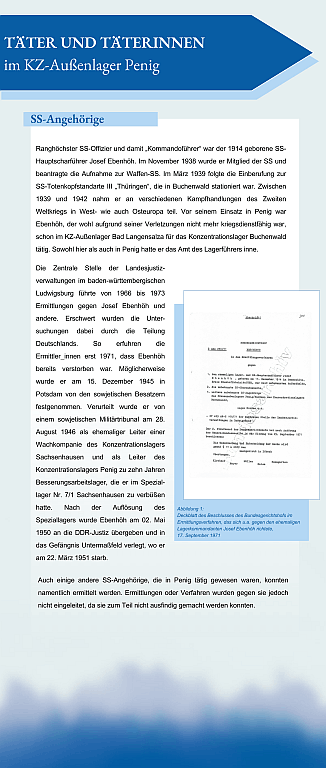
The highest-ranking SS officer – and thus the ‘command leader’ – was SS-Hauptscharführer Josef Ebenhöh, born in 1914. In November 1938 he became a member of the SS and applied for admission to the Waffen-SS. In March 1939 he was drafted into SS-Totenkopfstandarte III ‘Thüringen,’ which was stationed at Buchenwald. Between 1939 and 1942 he took part in various combat operations of the Second World War in both Western and Eastern Europe. Before his assignment in Penig, Ebenhöh – who was probably no longer fit for military service due to injuries – had already been employed at the Bad Langensalza subcamp for the Buchenwald concentration camp. Both there and in Penig he held the position of camp leader.
The Central Office of the State Justice Administrations in Ludwigsburg (Baden-Württemberg) conducted investigations against Josef Ebenhöh and others from 1966 to 1973. The investigations were hampered by Germany’s division. Thus, investigators only learned in 1971 that Ebenhöh had already died. He may have been arrested in Potsdam on 15 December 1945 by the Soviet occupying authorities. On 28 August 1946, a Soviet military tribunal sentenced him – both as a former commander of a guard company at Sachsenhausen concentration camp and as head of the Penig concentration camp – to ten years in a corrective labour camp, which he was to serve in Special Camp No. 7/1 Sachsenhausen. After the dissolution of the special camp, Ebenhöh was handed over to the GDR justice system on 2 May 1950 and transferred to Untermaßfeld prison, where he died on 22 March 1951.
Some other SS personnel who had been active in Penig could also be identified by name. However, no investigations or proceedings were initiated against them, as some of them could not be located.
Figure 1: Cover page of the Federal Court of Justice decision in the investigation proceedings, which were directed, among others, against the former camp commandant Josef Ebenhöh, 17 September 1971
Perpetrators in the Penig concentration camp subcamp
Female Guards
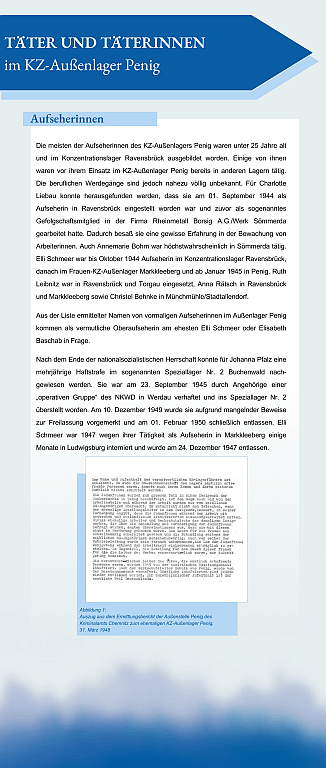
Most of the female guards at the Penig concentration camp subcamp were under 25 years old and had been trained at Ravensbrück concentration camp. Some of them had already served in other camps before being deployed to the Penig subcamp. However, their professional biographies are almost entirely unknown. In the case of Charlotte Liebau, it was established that she was hired as a guard at Ravensbrück on 1 September 1944 and had previously worked as a so-called member of the workforce at the company Rheinmetall Borsig AG / Sömmerda plant. This gave her some experience in supervising female workers. Annemarie Bohm was also very likely employed in Sömmerda. Elli Schmeer served as a guard at Ravensbrück until October 1944, then at the Markkleeberg women’s subcamp, and from January 1945 in Penig. Ruth Leibnitz was deployed in Ravensbrück and Torgau; Anna Rätsch in Ravensbrück and Markkleeberg; and Christel Behnke in Münchmühle/Stadtallendorf.
From the list of identified names of former female guards in the Penig subcamp, the most likely candidates for the position of chief overseer are Elli Schmeer or Elisabeth Baschab.
After the end of National Socialist rule, Johanna Pfalz was shown to have served a multi-year prison sentence in the so-called Special Camp No. 2 Buchenwald. She was arrested in Werdau on 23 September 1945 by members of an NKVD “operative group” and transferred to Special Camp No. 2. On 10 December 1949, she was earmarked for release due to lack of evidence and was finally released on 1 February 1950. In 1947, Elli Schmeer was interned for several months in Ludwigsburg because of her work as a guard in Markkleeberg and was released on 24 December 1947.
Figure 1: Excerpt from the investigation report by the Penig branch office of the Chemnitz Criminal Police Office concerning the former Penig concentration camp subcamp, 31 March 1948
Postwar period and coming to terms with the Penig concentration camp subcamp
The Postwar Period
After 15 April 1945, the camp site was probably used for a short, unspecified period as an internment camp for German prisoners of war. In the months that followed, the buildings were dismantled by the local population and used as construction material. It is also possible that some barracks were re-erected in the village for further use.
The first confrontation with the subcamp took place in September 1945, when the bodies of the fourteen forced labourers who had died in the camp and been buried on the camp grounds were exhumed and then reburied in the cemetery in Langenleuba-Oberhain. This task had to be carried out – intended as a form of ideological re-education – by former members of the local NSDAP group.
With the barracks of the Penig subcamp being torn down in the immediate postwar period and, in the 1960s, the construction of a local equestrian club facility on the former camp grounds, this historic site – as well as the former site of forced labour – gradually disappeared from the collective memory of the population.
The premises of the Max Gehrt Works in Penig continued to be used for economic purposes after the Second World War. In 1947, the machines and equipment of the plant were dismantled by the Soviet occupying power as reparations and transported to the Soviet Union. The business initially continued operating as Max Gehrt KG, a wholesale raw-materials company. In 1957, the state-owned collection and purchasing enterprise (VEAB) took over the site and used it until the reunification of the two German states in 1990. After 1990, the owners changed several times. From 2008 onward, the buildings stood empty, and most of the structures were demolished in 2011.
Figure 1: Former local NSDAP members – including the teachers Fritz Richter and Herbert Weiße, the master tailor Walter Ludwig, and the shoemaker Albert Groß – dig up the fourteen bodies buried at the camp; September 1945
Postwar period and coming to terms with the Penig concentration camp subcamp
Coming to terms with the past
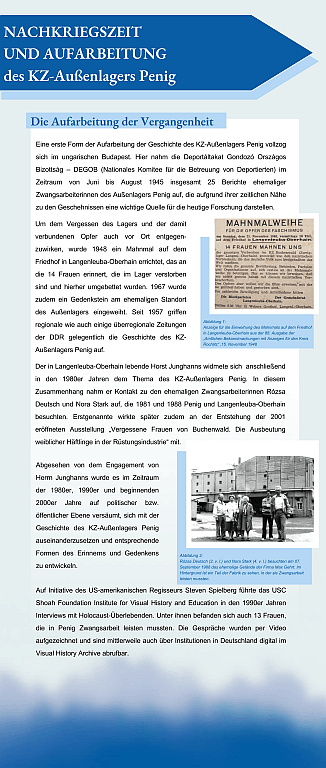
An initial form of coming to terms with the history of the Penig concentration camp subcamp took place in Budapest. There, the Deportáltakat Gondozó Országos Bizottság (DEGOB) (National Committee for the Care of Deportees) recorded a total of 25 reports by former forced labourers from the Penig subcamp between June and August 1945. Because of their closeness in time to the events, these accounts constitute an important source for research today.
To counteract the forgetting of the camp and its victims at the local level as well, a memorial was erected in 1948 in the cemetery in Langenleuba-Oberhain, commemorating the 14 women who died in the camp and were reburied there. In 1967, a commemorative stone was also inaugurated at the former site of the subcamp. From 1957 onward, regional – and also some supra-regional – newspapers in the GDR occasionally took up the history of the Penig subcamp.
Horst Junghanns, who lived in Langenleuba-Oberhain, then devoted himself to the topic of the Penig subcamp in the 1980s. In this context, he made contact with the former forced labourers Rózsa Deutsch and Nora Stark, who visited Penig and Langenleuba-Oberhain in 1981 and 1988. Deutsch later also contributed to the exhibition opened in 2001, “Forgotten Women of KZ Buchenwald: The Exploitation of Female Prisoners in the Armaments Industry.”
Aside from Mr. Junghanns’s efforts, in the 1980s, 1990s, and early 2000s political and public actors failed to engage with the history of the Penig subcamp and to develop appropriate forms of remembrance and commemoration.
On the initiative of the American director Steven Spielberg, the USC Shoah Foundation Institute for Visual History and Education conducted interviews with Holocaust survivors in the 1990s. Among them were 13 women who had been forced to perform labour in Penig. The interviews were recorded on video and can now also be accessed digitally in Germany via the Visual History Archive.
Figure 1: Announcement for the inauguration of the memorial at the cemetery in Langenleuba-Oberhain, from the 88th issue of “Official Notices with Advertisements for the District of Rochlitz,” 15 November 1948
Figure 2: Rózsa Deutsch (second from left) and Nora Stark (fourth from left) visited the former premises of the Max Gehrt company on 7 September 1988. Part of the factory in which they had to perform forced labour can be seen in the background
Postwar period and coming to terms with the Penig concentration camp subcamp
Coming to terms with the past
Since the end of 2014, the history of the Penig concentration camp subcamp has continued to be researched and worked through by the citizens’ initiative Gesicht zeigen – Netzwerk für demokratisches Handeln. In this context, an intensive search began for survivors and/or their descendants, for eyewitness testimonies, and for documents. With the help of the existing prisoner list, numerous records were able to be located.
On this basis, the initiative inaugurated two information panels in 2017 and 2020 – one on the former camp grounds and the other at the site of the former Max Gehrt Works. These are complemented by a commemorative plaque erected in 2021 at the cemetery in Langenleuba-Oberhain, which lists ten names of the total of fourteen women who died in the camp and were buried there after being exhumed and reinterred in September 1945.
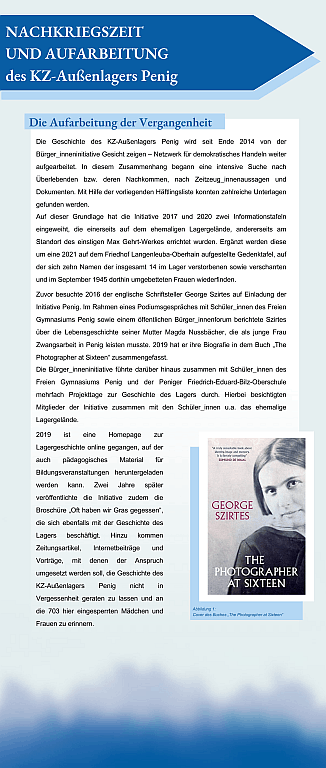
Earlier, in 2016, the English writer George Szirtes visited at the invitation of the Penig initiative. In the context of a panel discussion with students from the Freies Gymnasium Penig, as well as a public citizens’ forum, Szirtes spoke about the life story of his mother, Magda Nussbächer, who as a young woman was forced to perform labour in Penig. In 2019, he summarized her biography in the book The Photographer at Sixteen.
In addition, together with students from the Freies Gymnasium Penig and the Penig Friedrich-Eduard-Bilz secondary school, the citizens’ initiative held several project days on the history of the camp. During these, members of the initiative visited, among other places, the former camp grounds together with the students.
In 2019, a website about the camp’s history went online, from which educational materials for learning events can also be downloaded. Two years later, the initiative also published the brochure “Oft haben wir Gras gegessen” (“Often We Ate Grass”), which likewise deals with the history of the camp. In addition, there are newspaper articles, online posts, and lectures intended to ensure that the history of the Penig concentration camp subcamp is not forgotten and to commemorate the 703 girls and women imprisoned there.
Figure 1: Cover of the book The Photographer at Sixteen
Biographies of the women affected by forced labour
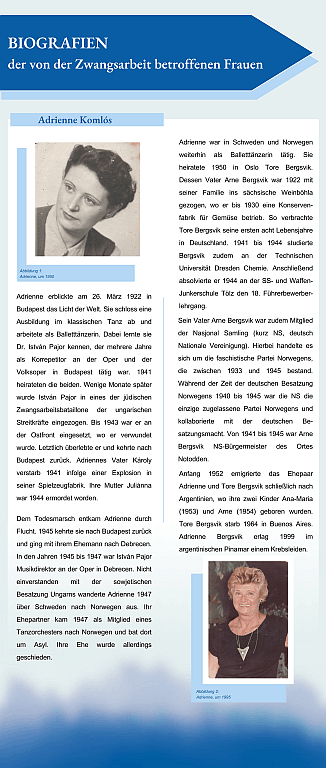
Adrienne Komlós
Adrienne was born on 26 March 1922 in Budapest. She completed training in classical dance and worked as a ballet dancer. During this time, she met Dr. István Pajor, who worked for several years as a répétiteur at the Opera and the Volksoper in Budapest. The two married in 1941. A few months later, István Pajor was drafted into one of the Jewish forced-labour battalions of the Hungarian armed forces. Until 1943 he was deployed on the Eastern Front, where he was wounded. Ultimately, he survived and returned to Budapest. Adrienne’s father, Károly, died in 1941 as a result of an explosion at his toy factory. Her mother, Juliánna, was murdered in 1944.
Adrienne escaped the death march by fleeing. In 1945 she returned to Budapest and went with her husband to Debrecen. From 1945 to 1947 István Pajor was music director at the opera in Debrecen. Disagreeing with the Soviet occupation of Hungary, Adrienne emigrated in 1947 via Sweden to Norway. Her spouse came to Norway in 1947 as a member of a dance orchestra and applied for asylum there. However, their marriage was divorced.
Adrienne continued to work as a ballet dancer in Sweden and Norway. In 1950 she married Tore Bergsvik in Oslo. His father, Arne Bergsvik, had moved with his family to Weinböhla in Saxony in 1922, where he operated a vegetable canning factory until 1930. Tore Bergsvik thus spent his first eight years in Germany. From 1941 to 1944 Bergsvik also studied chemistry at the Technical University of Dresden. He then completed the 18th officer-candidate course at the SS and Waffen Junker School in Tölz in 1944.
His father Arne Bergsvik was also a member of Nasjonal Samling (NS; “National Union”). This was Norway’s fascist party, which existed between 1933 and 1945. During the German occupation of Norway from 1940 to 1945, the NS was the only permitted party in Norway and collaborated with the German occupying power. From 1941 to 1945, Arne Bergsvik was the NS mayor of the town of Notodden.
In early 1952, Adrienne and Tore Bergsvik finally emigrated to Argentina, where their two children Ana-Maria (1953) and Arne (1954) were born. Tore Bergsvik died in Buenos Aires in 1964. Adrienne Bergsvik died of cancer in Pinamar, Argentina, in 1999.
Figure 1: Adrienne, c. 1950
Figure 2: Adrienne, c. 1995
Biographies of the women affected by forced labour
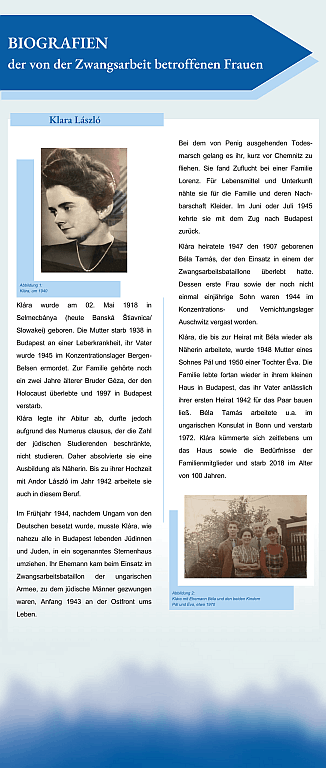
Klara László
Klara was born on 2 May 1918 in Selmecbánya (today Banská Štiavnica, Slovakia). Her mother died in Budapest in 1938 of a liver disease; her father was murdered in 1945 in the Bergen-Belsen concentration camp. The family also included a brother, Géza, two years older, who survived the Holocaust and died in Budapest in 1997.
Klara completed her secondary-school leaving examination, but because of the numerus clausus, which restricted the number of Jewish students, she was not allowed to study. She therefore trained as a seamstress. She worked in this profession until her marriage to Andor László in 1942.
In the spring of 1944, after Hungary was occupied by the Germans, Klara – like almost all Jews living in Budapest – was forced to move into a so-called “star house.” Her husband was killed in early 1943 on the Eastern Front while serving in a forced-labor battalion of the Hungarian army, to which Jewish men were compelled.
During the death march that set out from Penig, she managed to escape shortly before Chemnitz. She found refuge with a family named Lorenz. In exchange for food and lodging, she sewed clothes for the family and their neighbours. In June or July 1945, she returned to Budapest by train.
In 1947 Klara married Béla Tamás (born 1907), who had survived service in one of the forced-labour battalions. His first wife and their son – who was not yet one year old – were gassed in 1944 in the Auschwitz concentration and extermination camp.
Klara, who worked again as a seamstress until her marriage to Béla, became the mother of a son, Pál, in 1948 and a daughter, Éva, in 1950. The family thereafter lived again in their small house in Budapest, which her father had had built for the couple on the occasion of her first marriage in 1942. Béla Tamás worked, among other positions, at the Hungarian consulate in Bonn and died in 1972. Klara devoted her life to caring for the house and to the needs of her family members, and she died in 2018 at the age of 100.
Figure 1: Klara, c. 1940
Figure 2: Klara with her husband Béla and their two children Pál and Éva, c. 1970
Biographies of the women affected by forced labour
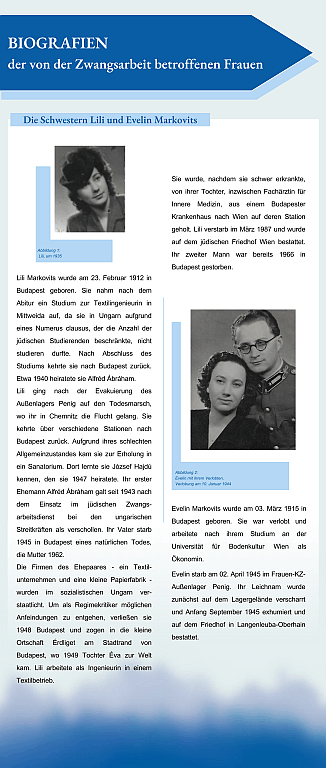
The Sisters Lili and Evelin Markovits
Lili Markovits was born on 23 February 1912 in Budapest. After completing her secondary-school leaving examination, she began studying textile engineering in Mittweida, since in Hungary she was not allowed to study because of a numerus clause that limited the number of Jewish students. After finishing her studies, she returned to Budapest. Around 1940 she married Alfréd Ábrahám.
After the evacuation of the Penig subcamp, Lili was forced onto the death march, from which she managed to escape in Chemnitz. She returned to Budapest via various stops. Because of her poor general condition, she went to a sanatorium to recuperate. There she met József Hajdú, whom she married in 1947. Her first husband, Alfréd Ábrahám, had been considered missing since 1943 after being deployed in the Jewish forced-labour service of the Hungarian armed forces. Her father died of natural causes in Budapest in 1945; her mother died in 1962.
The couple’s businesses – a textile company and a small paper factory – were nationalized in socialist Hungary. To avoid possible harassment as critics of the regime, they left Budapest in 1948 and moved to the small locality of Érdliget on the outskirts of Budapest, where their daughter Éva was born in 1949. Lili worked as an engineer in a textile plant.
After she fell seriously ill, her daughter – by then a specialist in internal medicine – brought her from a hospital in Budapest to Vienna, to her own ward. Lili died in March 1987 and was buried in Vienna’s Jewish cemetery. Her second husband had already died in Budapest in 1966.
Evelin Markovits was born on 3 March 1915 in Budapest. She was engaged and, after completing her studies, worked as an economist at the University of Natural Resources and Life Sciences in Vienna.
Evelin died on 2 April 1945 in the Penig women’s concentration camp subcamp. Her body was initially buried on the camp grounds, then exhumed in early September 1945 and buried in the cemetery in Langenleuba-Oberhain.
Figure 1: Lili, c. 1935
Figure 2: Evelin with her fiancé; engagement on 10 January 1944
Offline Website Creator